Check out the video below of the upcoming Van Gogh bio film, Loving Vincent. The film consists entirely of oil paintings and is the first feature length film of painted animation.
for more info visit the Loving Vincent website.


 During our week learning about Canadian (and local!) artist Emily Carr, my students created these acrylic paintings inspired by Carr's many forest artworks. For their compositions we drew inspiration from Carr's Blue Sky. We discussed Carr's love of nature and the Canadian landscape, as well as her increasing use of unnatural colours inspired by the Fauves. A number of the kids really took to incorporating unusual colours into their paintings, creating fantastical looking landscapes.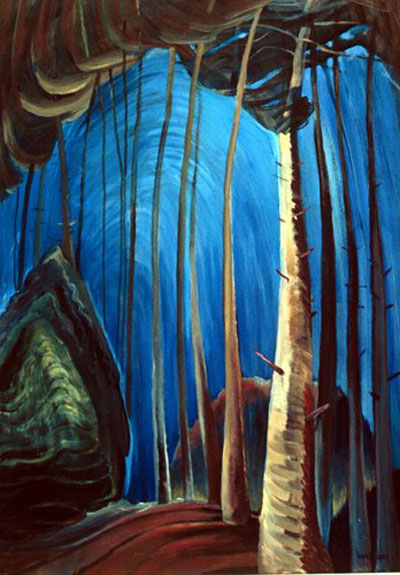






 My students created these colourful zebras using chalk pastels and charcoal. We started by drawing the zebras with pencil before going over our lines with willow bark charcoal. The kids the used chalk pastels in about 4 different colours blending the colours with their fingers ( a few kids wanted to make realistic looking zebras and so used white chalk pastel instead). I also had the kids use their fingers to smudge the chalk pastel out for their zebra's mane.


 My younger students (ages 5-8) created these monster paintings as part of a unit on puppeteer Jim Henson. For inspiration we looked at Henson's drawings of various creatures (in particular his bird-like frackles) that were later used as inspiration for the Jim Henson's City Critters.


 A mock demonstration was held outside the Museum of Fine Arts in Boston to protest the art of Pierre-Auguste Renoir which is currently being displayed. Led by Max Geller, who created the Instagram account Renoir Sucks at Painting, the protesters demanded that Renoir's art be taken down and replaced by that of other 'better' artists. While the protest is only semi-serious, and the style over substance reasoning behind Geller's disdain falls a little flat, the demonstration does raise awareness on the authority of museum institutions to dictate what is good art, as well as the need for personal love it or hate it passion to really appreciate and form a relationship with art.
  As part of my summer art courses I decided to have my students create a summer long collaborative artwork. We created our enchanted forest over 10 weeks, adding one new element each week. While I did this during the summer it could easily be adapted for the school year.


